Croatia Snorkeling
Tours & tickets

Hand-picked by our editors — only the best 5 experiences from 47 reviewed.

Open today 00:00–23:59
Attendance: Moderate—autumn season
Water temperatures remain mild through October.
Free cancellation Instant confirmation Mobile voucher Verified partner Skip-the-line
Tickets

Choose your ticket

Verified partners for every tour, free cancellation where available, and instant confirmation on every booking.

Krka Waterfalls & Primošten Beach Day Trip from Split 9 hr
Guided Experience

Krka Waterfalls & Primošten Beach Day Trip from Split

★ 4.8 (13586)
€26
per person
Instant Mobile voucher Flexible — change up to 24h

Discover cascading waterfalls, cruise the Krka River, and swim at stunning Adriatic beaches on this full-day escape

Reserve
Split: Blue Lagoon & 3 Islands Premium Speedboat Adventure 5 hr
Premium Combo

Split: Blue Lagoon & 3 Islands Premium Speedboat Adventure

★ 5 (4107)
$63
per person
Instant Mobile voucher Flexible — change up to 24h

Discover three breathtaking Adriatic destinations by luxury speedboat with swimming and snorkeling stops

Reserve

Prices from verified partners. Availability updates in real time at checkout. Free cancellation policies apply where shown.

Highlights

What you'll see inside the attraction

The landmarks, rooms, and views travelers on this tour remember — all visible on a single visit.

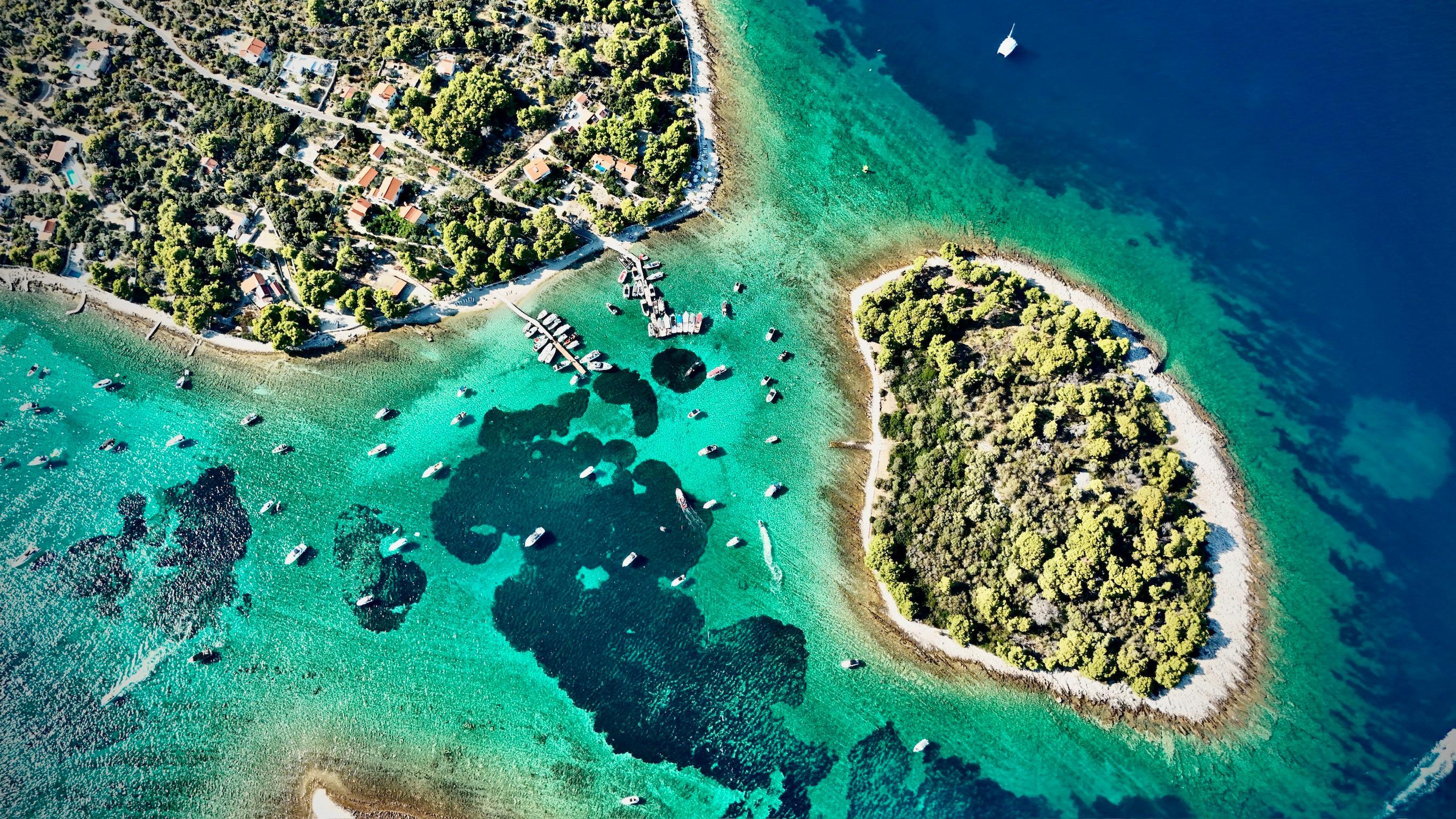
Krknjaš Veli Islet

One of two small islets sheltering the lagoon, providing calm, shallow waters for snorkelers.

Head to head

Blue Cave Tour vs. Split Croatia Snorkeling Tour — How to Choose

The Blue Lagoon offers a relaxed aquatic experience, whereas the five-island speedboat adventure is the superior choice for travelers seeking variety across the Adriatic Sea. While a split croatia snorkeling tour provides immediate access to marine life, the island-hopping itinerary demands more time on the water.

Feature Top pick Snorkeling Lagoon Blue Cave Adventure
Primary focus
Sightseeing and navigation
Travel time
9–10 hours
Physical activity level
Low to moderate
Cost expectation
100–160 EUR
Ideal for
Island explorers

Verdict: Choose the split croatia snorkeling tour tour for dedicated swimming time or the island adventure if you prefer diverse coastal landmarks and skip-the-line split croatia snorkeling tour tickets for the grotto.

How your ticket works

Book your ticket in 3 steps

  1. 01

    Book online

    Choose your ticket, select your date, and reserve in under two minutes. Secure checkout handled by our verified partner.

  2. 02

    Receive your mobile voucher

    Instant confirmation by email, with a mobile voucher you can save offline. No printing, no queuing at a collection desk.

  3. 03

    Show & enter

    Arrive at the entrance, show your voucher on your phone, and walk in. Most tickets include priority or skip-the-line access.

Plan your visit

Everything you need to know before you go

Practical details for your visit straight from our verified partners — hours, access, rules, and how to get there.

Open today · 00:00–23:59
Opening Hours
00:00–23:59
Address
Krknjaši Bay, Drvenik Veli, Croatia
Accessibility
Boat-access only
Best arrival
09:00–12:00
Region
Adriatic Sea
Mon
00:00–23:59
Tue
00:00–23:59
Wed
00:00–23:59
Thu
00:00–23:59
Fri
00:00–23:59
Sat
00:00–23:59
Sun
00:00–23:59
Location

Address
Krknjaši Bay, Drvenik Veli, Croatia
Region
Adriatic Sea

Dress code

Wear comfortable swimwear and bring a light cover-up for the boat ride. Sturdy sandals are recommended for navigating rocky island shorelines.

Bags & security

Space on speedboats is limited, so please bring only essential soft-sided bags. Operators generally do not provide lockers, so keep valuables to a minimum.

Photography

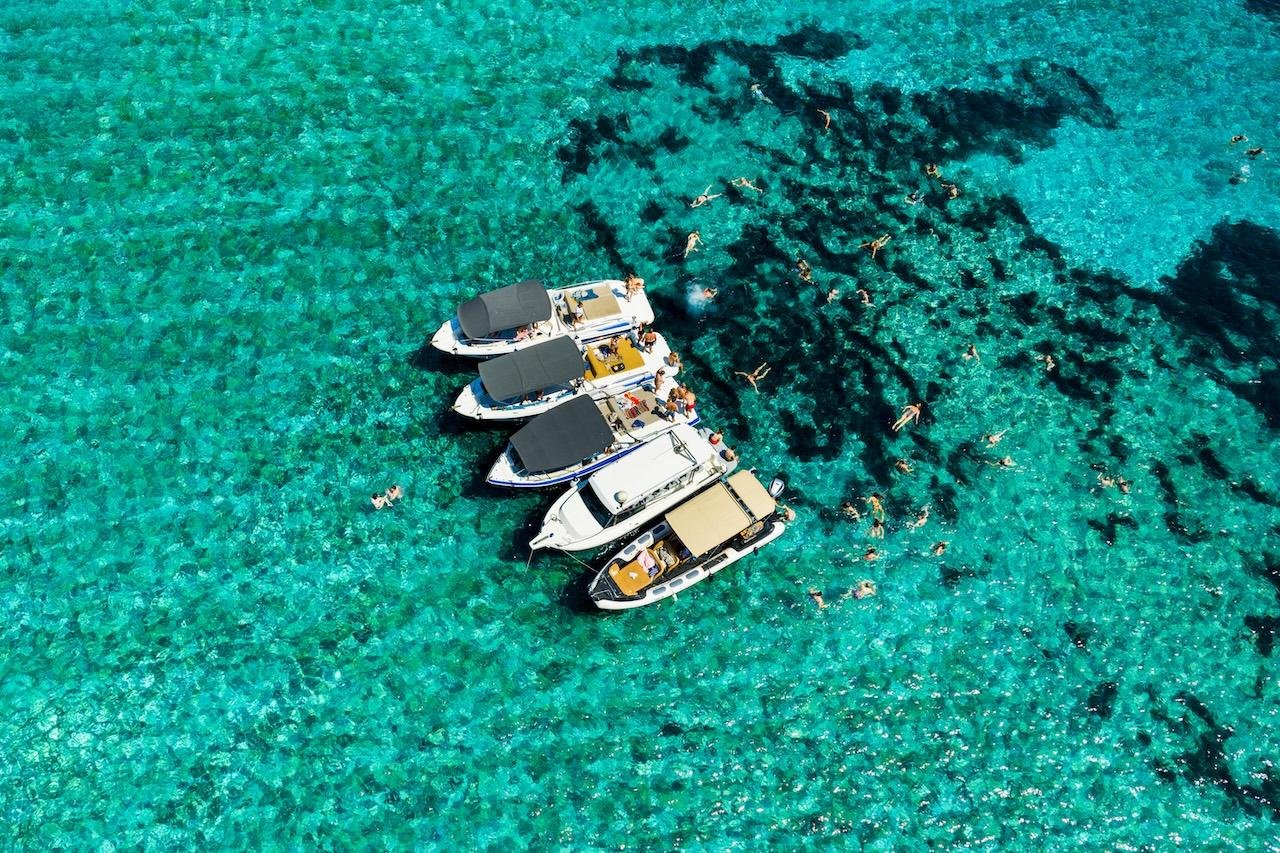
The clear turquoise water of the split croatia snorkeling tour provides exceptional lighting for underwater photography. A waterproof housing for your camera or phone is highly recommended.

Accessibility

The attraction is accessible only by boat, and boarding requires physical mobility to step onto docks or smaller vessels. It is not suitable for those with limited mobility or wheelchair users.

What to bring

  • Sunscreen
  • Water shoes
  • Snorkeling mask
  • Towel
  • Cash
  • Hat
  • Sunglasses

Not allowed

  • Spearguns
  • Anchors in seagrass
  • Waste
  • Chemical sunscreens
  • Harassing marine life
  • Drones
  • Sharp objects
  • Flammables

Families & strollers

The shallow, sandy seabed makes this a popular choice for families with children. Always supervise young swimmers closely, as there are no lifeguards on duty.

Food & drink

While some tours include snacks or lunch, many travelers prefer to bring their own refreshments. Traditional taverns are located nearby on Drvenik Veli for those wishing to purchase a meal.

Around your visit

Everything else worth knowing

Best time to go, insider tips, nearby landmarks, and the cancellation fine print — flip through to skim what matters to you.

Cancellation policy

Flexible, no hidden fees.

Full refunds are typically available for any split croatia snorkeling tour booking canceled at least 24 hours prior to departure. The entrance fee to this natural lagoon is 0 EUR, as costs apply only to independent boat operators.

About

The place, in context

Split's snorkeling corridors radiate from a coastline that has served mariners for twenty-three centuries, yet the underwater clarity along the central Dalmatian archipelago remains its most guarded asset. Krknjaši Bay on Drvenik Veli records visibility exceeding thirty metres during calm mornings, a consequence of minimal riverine sediment and the Adriatic's steep shelf geometry. The Blue Lagoon earned its colloquial name not from tour marketing but from fishermen who noted the turquoise gradient created by white limestone sand reflecting midday sun through shallow water columns. Split Croatia snorkeling tour operators concentrate departures between April and October, when sea temperatures climb from sixteen to twenty-five degrees Celsius and the maestral wind patterns stabilise. The Pakleni Islands, Brač's southern coves, and the rocky perimeter of Šolta present distinct benthic ecosystems: Posidonia meadows shelter juvenile fish, while limestone overhangs host octopus and damselfish. These sites lie within the eleven-thousand-square-kilometre expanse of the Adriatic that Croatia manages under its maritime jurisdiction, a zone where commercial trawling restrictions have allowed reef structures to recover since the early two-thousands. The modern iteration of Adriatic snorkeling evolved alongside Split's tourism infrastructure, which expanded rapidly after the country's 2013 accession to the European Union. Speedboat charters replaced the slower konoba-run excursions that once ferried locals to secluded beaches. Today's six-to-eight-hour circuits bundle swimming stops with cultural anchors—Hvar's Renaissance architecture, the stone hamlets of Vis—but the underwater intervals anchor the experience. Equipment quality varies: premium operators stock prescription masks and wetsuit options for shoulder-season departures. Conservation protocols remain informal. Krknjaši Bay carries no entrance fee, and while tour guides brief passengers on reef etiquette, enforcement depends on operator discretion. The absence of mooring buoys at popular sites means anchor damage persists in high-traffic zones. Environmental groups have documented coral abrasion along the Blue Lagoon's northeastern edge, where shallow draft vessels concentrate during peak summer weeks. The Adriatic's relative oligotrophy—low nutrient levels that sustain its clarity—also renders its ecosystems fragile. Recovery from physical disturbance proceeds slowly in waters this transparent.

"Krknjaši Bay records visibility exceeding thirty metres during calm mornings, a consequence of minimal riverine sediment and the Adriatic's steep shelf geometry."
Your experience

What a tour day looks like

A step-by-step walkthrough of the visit — what you'll see, how long each stage takes, and the details that matter.

You board a speedboat at Split's Riva promenade as the sun clears Marjan Hill, the hull cutting southeast toward the archipelago. Forty minutes later the engine throttles down at Krknjaši Bay, where the water shifts from deep blue to luminous turquoise over white sand. You adjust your mask, step off the swim platform, and descend into water so clear the anchor chain traces a straight line to the seabed six metres below. Small wrasse dart between Posidonia fronds; a sea cucumber rests motionless on limestone rubble. The guide signals after thirty minutes, and the boat continues to a second site off Brač's southern coast, where the shelf drops steeply and larger fish—gilt-head bream, Mediterranean barracuda—patrol the thermocline. You float above the gradient, watching light refract through the water column. By midday the group moors near Hvar for lunch, then a final snorkel stop at a rocky inlet on Šolta, where the current picks up and you drift along the shoreline, scanning crevices for octopus. The return leg skims the open water, Split's white stone waterfront growing larger as the afternoon wind begins to rise.

Frequently asked

Frequently asked questions about split croatia snorkeling tour tours

What is the entrance fee for the lagoon?

Entrance to the lagoon is 0 EUR, as it is a natural bay; costs only apply to the boat tours themselves.

When are the best hours to start a split croatia snorkeling tour?

The best arrival window is 09:00–12:00 to ensure the clearest water and avoid peak winds.

Is a split croatia snorkeling tour suitable for children?

Yes, the shallow, sandy waters of the Krknjaši Bay make it an excellent choice for a family-friendly snorkeling experience.

Can I book split croatia snorkeling tour tickets on-site?

Tours should be booked with operators in advance; there are no ticket booths at the lagoon for a split croatia snorkeling tour.

What is the address of the Krknjaši Bay area?

The address for the area is Krknjaši Bay, Drvenik Veli, Croatia.

Are there lockers available for my split croatia snorkeling tour tour?

Most boats on a split croatia snorkeling tour do not provide lockers, so please travel light.

What is the best month for a split croatia snorkeling tour?

September is widely considered the best month for a split croatia snorkeling tour due to warm water and fewer crowds.

Are there marine life protections to consider?

Yes, Mediterranean seagrass meadows are protected; please use designated mooring buoys during your split croatia snorkeling tour.

How do I reach the starting point for my split croatia snorkeling tour?

Most tours depart from the Riva or Matejuška pier in Split, though confirmed meeting points vary by operator.